Video
Kušāns Rulers: In Search of an Imperial Narrative (Second to Fourth Centuries CE)
Introduction by M. Rahim Shayegan
Abstract
Kušān Rulers: In Search of an Imperial Narrative (Second to Fourth Centuries CE)
Evidence such as coinage, the Rabatak inscription, the archaeological site of Surkh Kotal, and Huviška’s cotton painting sheds light on the political discourse of the Kušāns. Kaniška’s (r. 126–c. 150) ideological program focused on the following:
(1) abandoning the Greek script in diplomatic discourse, favoring an “Aryan” (that is, the Bactrian) language; and utilizing Indian titles (e.g., devaputra “son of god”) on the eastern side of the empire;
(2) incorporating Achaemenid formulaic language into the self-presentation of the sources of his power; and
(3) emphasizing a multicultural message rooted in religious plurality.
The latter point is evidenced by the observance of a specific iteration of Zoroastrianism, the patronage of multiple Indian cults (including Buddhism, though primarily at a local Indian level), and support for a more elaborate form of syncretism through the promotion of two specific religious figures: Wēš, a version of the god Vayu addressing the Shivaites, and Manāvagh, a version of Vohu Manah addressing the Vishnuites.
These tendencies were further developed under the successor dynasty of the Kušāno-Sasanians (c. 280–400 CE). Such actions served to consolidate Kušān rule, foster a shared cultural identity across the vast empire, and facilitate the spread of ideas along the Silk Road.
Citation
Grenet, Franz. "Kušāns Rulers: In Search of an Imperial Narrative (Second to Fourth Centuries CE)" Ancient Iran and Central Asia: Interactions and Shifting Identities (March 6, 2026).
About the Speaker
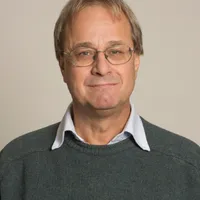
Frantz Grenet
Collège de France
Frantz Grenet has been since 2013 a Professor at the Collège de France and currently holds the chair of History and Cultures of Pre-Islamic and Central Asia (Histoire et cultures de l’Asie centrale préislamique). He studied at the École Normale Supérieure, Paris (1972–1977), focusing on the history and archaeology of Central Asia and the history of Zoroastrianism as his main fields of research. From 1977 to 1981, he was deputy director of the French Archaeological Delegation in Afghanistan (FADA) and participated in the excavations at Ai Khanum under the directorship of Paul Bernard. From 1981 to 2013, he was a research fellow at the Centre National de la Recherche Scientifique (CNRS), Paris. Professor Grenet serves as director of the French-Uzbek Archaeological Mission in Sogdiana (1989–2014, and again since 2021), working mainly at Samarkand. Before taking up his position at the Collège de France, he was professor at the École Pratique des Hautes Études (1999-2014), holding the chair of Religions of the Ancient Iranian World. Professor Grenet is a member of the Académie des Inscriptions et Belles-Lettres (inducted 2022), a member of the American Philosophical Society (joined 2017), a fellow of the Institute for the Study of the Ancient World (member of the Advisory Board, 2013–2017), and a board member of the Corpus Inscriptionum Iranicarum. He is also an honorary citizen of Samarkand (2018). Professor Grenet served as president of the scientific committee of the exhibition Splendeurs des oasis d’Ouzbékistan (Louvre, November 23, 2022 – March 6, 2023). His main publications include: Les pratiques funéraires dans l’Asie centrale sédentaire de la conquête grecque à l’islamisation (Paris, 1984); A History of Zoroastrianism, vol. 3, Zoroastrianism under Macedonian and Roman Rule (Leiden, 1991; with Mary Boyce); La geste d’Ardashir, fils de Pâbak (Die, 2003); and The Golden Journey to Samarkand (selected articles translated into Chinese; Guilin, 2017). He has most recently collaborated with Nicholas Sims-Williams on The ‘Ancient Letters’ and Other Early Sogdian Documents and Inscriptions (2023), and Bactrian Documents IV (2025) as part of the Corpus Inscriptionum Iranicarum. He has produced seven edited or coedited collective volumes and approximately 200 articles in peer-reviewed journals, published in French, English, Russian, Persian, Chinese, and Japanese.