Co-Hosted Seminar at Columbia University: Austin O’Malley
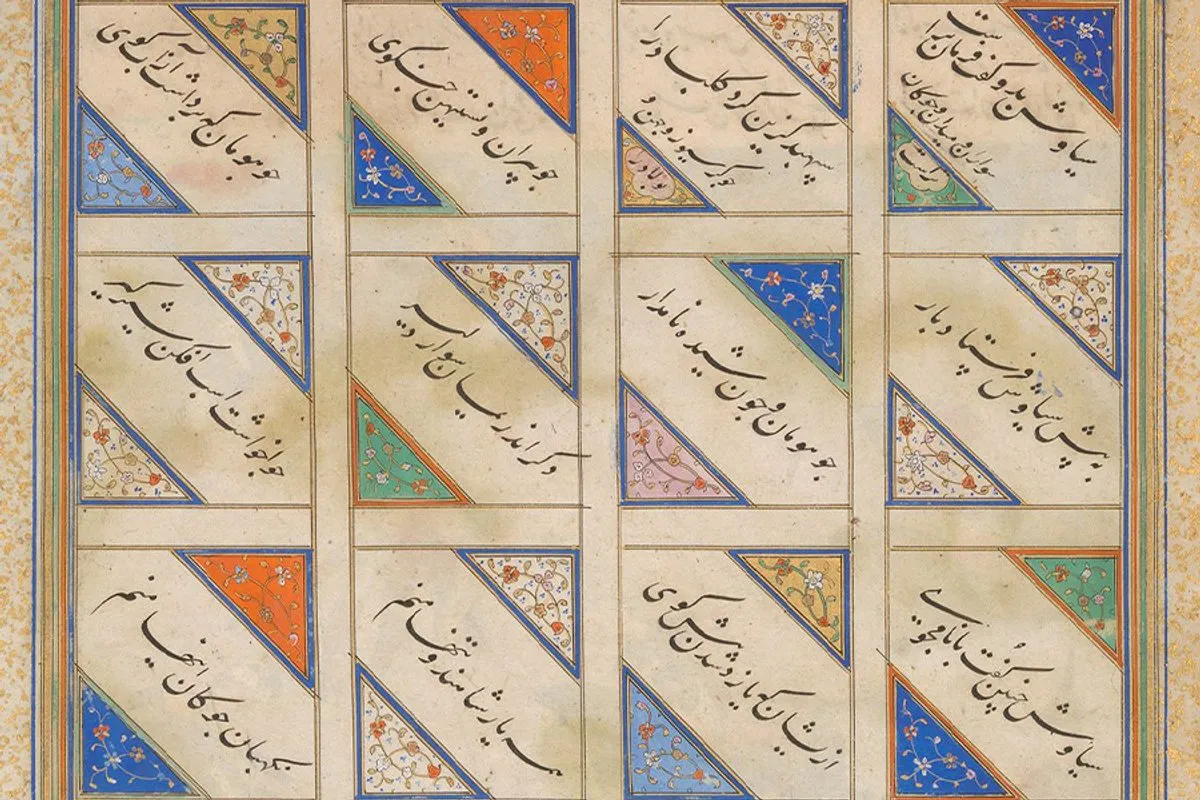
The Yarshater Center is pleased to co-host an Iranian Studies Seminar featuring Austin O’Malley (Assistant Professor of Persian Literature, University of Chicago). The event is part of the University Seminars at Columbia University and will be held in-person in New York.
Abstract
Weary of Rostam, Longing for Joseph: Authorship and the Textual Tradition of Pseudo-Ferdowsi’s Yūsuf va Zulaykhā
From the middle of the fifteenth century, a versified version of the prophet Joseph’s life was attributed to Firdawsī (d. ca. 1019), the famed other of the Šāhnāme. The poem was relatively popular, but in the mid-twentieth century it was shown to be a spurious attribution, after which it received little scholarly attention. This talk takes the misattribution not as an end point for inquiry but as a beginning, asking how attribution was made, how it developed at the hands of scribes and copyists, and why it found particular purchase in the Timurid era. To answer these questions, traditional methods of stemmatic analysis are recuperated to a new purpose: instead of reconstructing an Urtext, scribal intervention in the tradition is traced and highlighted.
About the Iranian Studies Seminars at Columbia University
The purpose of these monthly gatherings is to present and promote new research in Iranian studies from pre-Islamic times to the present. The seminar provides an opportunity for scholars and researchers in the greater metropolitan area to meet regularly and exchange views and discuss the topics of their research interests.
About the Speaker
Austin O’Malley
University of Chicago
Austin O’Malley is a scholar of classical Persian literature with a special interest in performance, textuality, and reception, particularly in Sufi contexts.
His first book, The Poetics of Spiritual Instruction: Farid al-Din ʿAttar and Persian Sufi Didacticism (Edinburgh UP, 2023), uncovers an implicit poetics of didacticism embedded within Sufi homiletic verse. While treating didactic verse more broadly, it focuses on the narrative poetry of ʿAttar (d. c. 1221) in particular, whose innovative frame-tale structures allow the poet to reflexively imagine his own poems’ idealized reception. Through a close reading of ʿAttar’s works alongside other religious and literary texts, the monograph shows how didactic speech worked on its recipients on a bodily, psychological, and an ontological level, and how readers’ encounters with ʿAttar’s poems thereby functioned as symbolic performances of particular Sufi rituals and social relationships.
He has also published on hagiographical texts, a Perso-Hellenic verse romance, and the quatrains of ‘Omar Khayyam. He is currently at work on a second monograph on forged and spurious works from the Timurid period, in which he shows how literary misattribution—intentional or otherwise—functioned as a generative mode of imagining the literary past.