Frantz Grenet: Eastern Iranian Contributions to the Construction of the Šāhnāme
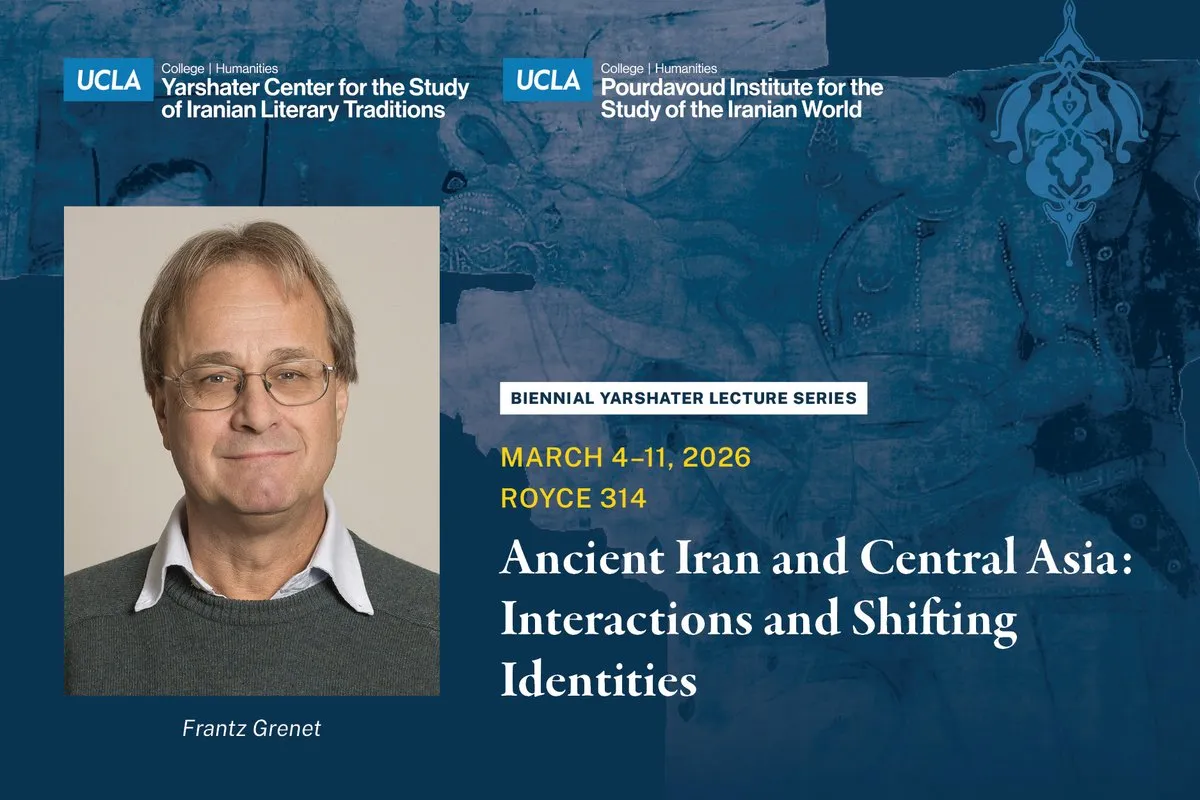
This lecture is part 3 of 4 of the 2026 Biennial Ehsan Yarshater Lecture Series, delivered by Frantz Grenet on the theme, “Ancient Iran and Central Asia: Interactions and Shifting Identities.”
Abstract
Eastern Iranian Contributions to the Construction of the Šāhnāme: Kušāno-Sasanians, Sīstānīs, and Sogdians (Fourth to Eighth Centuries CE)
Diplomatic discourse furthered the ideological construction of a (pan-)Iranian identity, but literature, particularly the mytho-epic traditions, also contributed to this process. References to the Kayanids existed in Kušāno-Sasanian royal onomastics before they appeared in Sasanian royalty. Clusters of Kayanid toponyms are attested in eastern Bactria, and may also date to the Kušāno-Sasanian period. Early literary evidence for the Šāhnāme includes references to a “proto-Šāhnāme” of which a Sogdian fragment containing an episode of Rostam bears witness. The first pictorial representation of a Šāhnāme episode anywhere in the Iranian world appears in a mural painting at Kuh-e Ḵvājah, dating to the fifth or sixth century. In the later period, four Šāhnāme or peri-Šāhnāme episodes have been identified, some very recently, in Sogdian paintings of the eighth century. Interestingly, these paintings attest to a self-identification of the Sogdians as Iranians, rather than Turanians, during this early phase in the development of the Šāhnāme.
Event Video
Frantz Grenet, Collège de France
About the Speaker
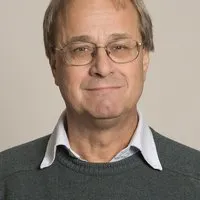
Frantz Grenet
Collège de France
Frantz Grenet has been Professor at the Collège de France since 2013 and currently holds the chair of History and Cultures of Pre-Islamic Central Asia (Histoire et cultures de l’Asie centrale préislamique).
He studied at the École Normale Supérieure, Paris (1972–1977), focusing on the history and archaeology of Central Asia and the history of Zoroastrianism as his main fields of research. From 1977 to 1981, he was deputy director of the French Archaeological Delegation in Afghanistan (FADA) and participated in the excavations at Ai Khanum under the directorship of Paul Bernard. From 1981 to 2013, he was a research fellow at the Centre National de la Recherche Scientifique (CNRS), Paris.
Professor Grenet serves as director of the French-Uzbek Archaeological Mission in Sogdiana (1989–2014, and again since 2021), working mainly at Samarkand. Before taking up his position at the Collège de France, he was professor at the École Pratique des Hautes Études (1999–2014), holding the chair of Religions of the Ancient Iranian World. Professor Grenet is a member of the Académie des Inscriptions et Belles-Lettres (inducted 2022), a member of the American Philosophical Society (joined 2017), a fellow of the Institute for the Study of the Ancient World (member of the Advisory Board, 2013–2017), and a board member of the Corpus Inscriptionum Iranicarum. He is also an honorary citizen of Samarkand (2018). Professor Grenet served as president of the scientific committee of the exhibition Splendeurs des oasis d’Ouzbékistan (Louvre, November 23, 2022 – March 6, 2023).
His main publications include: Les pratiques funéraires dans l’Asie centrale sédentaire de la conquête grecque à l’islamisation (Paris, 1984); A History of Zoroastrianism, vol. 3, Zoroastrianism under Macedonian and Roman Rule (Leiden, 1991; with Mary Boyce); La geste d’Ardashir, fils de Pâbak (Die, 2003); and The Golden Journey to Samarkand (selected articles translated into Chinese; Guilin, 2017). He has most recently collaborated with Nicholas Sims-Williams on The ‘Ancient Letters’ and Other Early Sogdian Documents and Inscriptions (2023), and Bactrian Documents IV (2025) as part of the Corpus Inscriptionum Iranicarum. He has produced seven edited or coedited collective volumes and approximately 200 articles in peer-reviewed journals, published in French, English, Russian, Persian, Chinese, and Japanese.